So who decides which march may happen?
Pollar Films
23 October
Synthetic voice (AI).
How it works
Watch 2:56
Preparing
2:56 left
Replay
Watch 2:56
From the story
French protests turn violent: looting, curfews and a €2 billion hit to Carrefour shares
Transcript
For Saturday, two marches were declared from the same square in Paris:
Place de la Bastille.
The CGT, a trade union, proposed one, to the Place de la Nation.
A student collective and yellow-vest organisers proposed the other, to the Opéra.
Paris police say the first may go ahead.
They announced a ban on the second.
Their stated reason is the route, after last weekend's violence.
Last Saturday, the Interior Ministry counted 550,000 marchers across France.
In several cities it ended in looting and fires, with almost 2,400 arrests.
On Sunday, President Emmanuel Macron blamed far-left groups.
On Monday, the Paris prosecutor said
she couldn't confirm that about those arrested there.
What's still unverified about last Saturday opens this week's Pollar Sounds.
10 minutes, in the Pollar app or wherever you get podcasts.
On Thursday, Macron set out his rule: unions would be offered other routes;
marches not called by unions would be banned, wherever possible.
So who decides which march may happen?
In France, you don't ask permission to march.
You declare it, 3 to 15 full days ahead.
A ban needs a public-order reason.
And judges require it to be necessary and proportionate: a last resort.
The articles on demonstrations don't mention unions.
The ban is an order,
from the mayor or the prefect, the government's representative.
We read 13 of this week's ban orders.
Some ban protests within set areas, others ban named demonstrations.
None gives the organisers' union status as a reason.
In part of Limoges,
groups of more than 10 are banned from Saturday morning into Sunday.
In Metz, a student union's march was banned
for a late declaration and no proof of stewarding.
The CGT says its marches aren't allowed everywhere either,
and that unions can't monopolise the right to march.
The Interior Ministry tells prefects to weigh organisers' reliability and stewards.
A judge can suspend a ban.
Urgent cases over a fundamental freedom get a ruling within 48 hours.
On Thursday, a Paris court suspended the ban on that day's student march.
The police replied with a new order: gather, but don't march.
That evening, a magistrates' union and a civil-liberties group
asked France's top administrative court to suspend Macron's rule.
The group's lawyer calls it an abuse of power.
A government adviser answered that the prefect decides, on public order.
Under the law, a union name can't settle it.
A ban needs a public-order reason that a judge can review.
More films
2:57
2:57
2:57
So why switch off?
22 October
2:57
2:57
2:57
So how did a power failure in one zone disrupt services across the region?
21 October
2:47
2:47
2:47
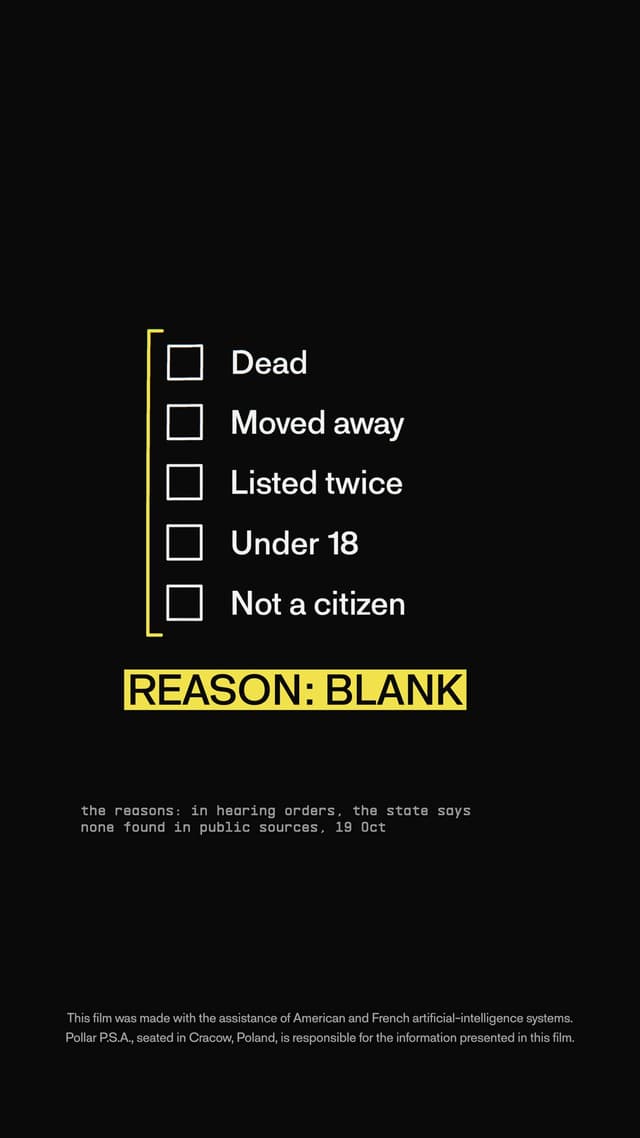
Until those are public, the only record of why is an empty box.
19 October
2:56
2:56
2:56
So who ordered it?
17 October
2:58
2:58
2:58
From July, either the tax gets paid, or the drinks change.
14 October
2:54
2:54
2:54
We watched from orbit what happened before, and after.
13 October
2:48
2:48
2:48
Is oil the reason?
12 October
2:47
2:47
2:47
In October, drones hit 3 of Yandex's data centres in 4 days.
11 October
Home
Brief
Live
Threads
Search